
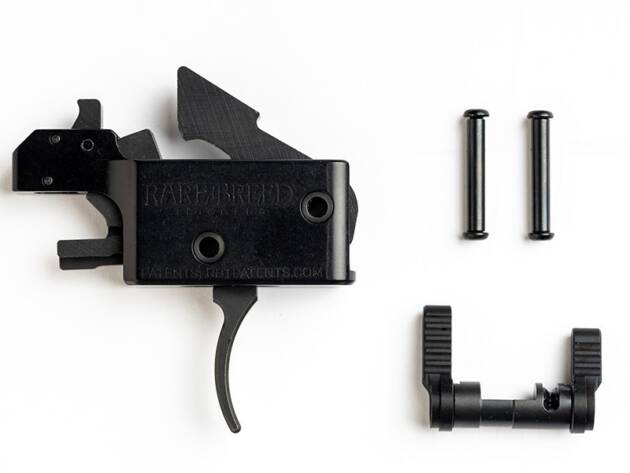
FRT-15L3 Trigger: How FRT Triggers Work, Features, and Legal Status
If you have been searching for AR-15 FRT, FRT trigger AR-15, FRT-15 trigger, or Rare Breed FRT 15l3 trigger, you have probably encountered a lot of conflicting information about forced reset triggers. This guide explains what an FRT trigger is, how the mechanism works at a high level, how the FRT-15L3 relates to the AR-15 platform, and why the legal status of these devices requires careful attention.
What Is an FRT Trigger?
FRT stands for Forced Reset Trigger. An FRT trigger is a firearm trigger mechanism designed to use the firearm’s cycling action to mechanically reset the trigger after a shot.
Unlike a conventional AR-15 trigger, an FRT is designed around a mechanical reset system that can provide a distinctive forced-reset feel and facilitate rapid follow-up shots.
The term FRT trigger is commonly used interchangeably with forced reset trigger, while searches such as AR15 FRT, AR 15 FRT trigger, FRT AR, and FRT-15 generally refer to FRT mechanisms intended for AR-pattern firearms.
How Does a FRT Trigger Work?
So, how does a FRT trigger work?
At a high level, the mechanism uses the firearm’s cycling action to reset the trigger.
The basic sequence is:
- The trigger is actuated and the firearm fires.
- The firearm cycles as part of its normal operating sequence.
- Components within the FRT mechanism interact with the cycling action.
- The trigger is mechanically driven back toward its reset position.
- The mechanism is then ready for another firing cycle.
This is the fundamental distinction between a forced reset trigger and a conventional trigger. A conventional trigger normally relies on the shooter’s trigger movement and release to complete the reset process, whereas an FRT incorporates a mechanical reset mechanism.
Because the exact operation depends on the specific trigger design and firearm configuration, manufacturer documentation and qualified gunsmith guidance should be consulted for technical questions.
What Is the Rare Breed FRT-15L3?
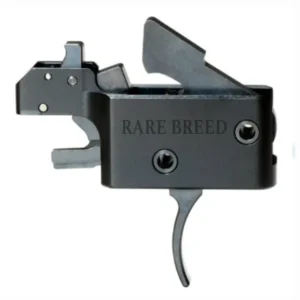
The Rare Breed FRT-15L3 is a forced reset trigger associated with the AR-15 platform. It is part of the broader category of FRT triggers that became the subject of significant federal litigation and regulatory controversy.
Searches for Rare Breed trigger, Rare Breed FRT 15L3, FRT 15L3 trigger, and FRT-1513 trigger often refer to the same general product category or related Rare Breed terminology.
The FRT-15L3 is notable because forced reset triggers have been the subject of competing legal positions concerning whether particular devices meet the federal statutory definition of a machine gun.
FRT 3 Position Trigger
Another search term frequently associated with the product category is FRT 3 position trigger.
A three-position design generally refers to a selector arrangement with distinct operating positions. However, the exact functions and configuration depend on the particular firearm and trigger system.
Consumers should not assume that every product marketed as an FRT 3-position trigger has identical features. Product documentation and applicable law should be checked for the specific model.
FRT Drop-In Trigger
Some FRT products are marketed as FRT drop-in triggers, referring to their form factor and intended installation into compatible firearm platforms.
The term “drop-in” describes the physical design of a trigger assembly; it does not by itself establish compatibility, legality, or safe operation.
Compatibility can depend on the specific lower receiver, fire-control components, firearm configuration, and manufacturer specifications. Modifying a firearm’s fire-control system can also create safety and legal considerations.
FRT Triggers and AR-15 Platforms
The search term AR15 FRT is commonly associated with forced reset triggers designed for AR-pattern firearms.
An AR-15 FRT trigger differs from a conventional AR-15 trigger primarily because of its mechanical reset system. The distinction is important when researching:
- AR 15 FRT triggers
- FRT trigger AR15
- FRT AR
- FRT-15 trigger
- FRT 15 trigger
- AR15 FRT trigger
- Rare Breed FRT
- FRT drop-in trigger
These terms can describe related products, but they should not automatically be treated as interchangeable.
FRT Pistol: Why the Term Requires Care
You may also encounter searches for FRT pistol or FRT triggers for pistols.
This is an especially important area to research carefully. In the May 2025 settlement resolving federal litigation involving Rare Breed Triggers, the U.S. Department of Justice stated that Rare Breed agreed not to develop or design FRTs for use in any pistol and agreed to promote safe and responsible use of its products.
Therefore, information about an FRT designed for an AR-pattern rifle should not automatically be applied to pistol configurations.
Is the Rare Breed FRT Legal?
One of the most common questions is:
Is the Rare Breed FRT legal?
There is no responsible one-line answer that applies to every person and every jurisdiction.
The federal legal history is complicated. In July 2024, a federal district court in Texas concluded that FRTs could not be classified as machineguns under the circumstances addressed in that litigation. The Department of Justice subsequently announced a settlement with Rare Breed Triggers in May 2025. The settlement resolved multiple cases and included specific conditions concerning Rare Breed’s conduct and products.
Earlier federal government litigation had taken the opposite position. In prior proceedings, ATF had classified the Rare Breed FRT-15 as a machinegun, and federal prosecutors had argued that its operation allowed multiple shots without a conventional trigger release and pull.
The legal history therefore cannot accurately be summarized as simply “FRTs are legal” or “FRTs are illegal.”
Federal, state, and local laws can differ, and laws and court decisions can change. Anyone researching an FRT should verify the law applicable to their specific location and circumstances and consult a qualified firearms attorney when necessary.
FRT-15 Legal History Explained
The legal controversy surrounding the FRT-15 has involved several stages.
Federal authorities previously argued that certain forced reset triggers met the federal definition of a machinegun. In 2023, the Justice Department obtained a temporary restraining order in litigation involving Rare Breed, with the government alleging that FRT-15 products constituted machineguns under federal law.
In July 2024, however, the Northern District of Texas reached a different conclusion concerning the federal classification of FRTs. The DOJ’s later May 2025 settlement acknowledged that ruling and resolved the litigation involving Rare Breed rather than continuing the appeals.
This history is why older articles and current articles about Rare Breed FRT legality can appear to contradict one another.
FRT-15L3 and Responsible Firearm Ownership
Because an FRT is part of a firearm’s fire-control system, responsible ownership includes understanding:
- Applicable federal law
- State and local firearm regulations
- Manufacturer specifications
- Safe firearm-handling practices
- Compatibility requirements
- Any applicable restrictions concerning particular firearm configurations
Do not rely solely on an online product listing or an old forum post when determining whether a particular FRT configuration is lawful.
Rare Breed FRT-15L3 FAQ
How does a FRT trigger work?
A forced reset trigger uses the firearm’s cycling action to mechanically reset the trigger. This produces a forced-reset action that differs from the reset mechanism of a conventional trigger.
What is an FRT-15 trigger?
An FRT-15 trigger is a forced reset trigger associated with AR-pattern firearms. “FRT-15” is also commonly used when referring to products in the Rare Breed FRT product family.
What is the FRT-15L3 trigger?
The FRT-15L3 trigger is a Rare Breed forced reset trigger associated with the AR-15 platform.
What is an FRT drop-in trigger?
An FRT drop-in trigger generally refers to an FRT assembly designed in a form intended for installation as a unit rather than assembling individual fire-control components separately. Exact compatibility depends on the specific product and firearm.
Is a Rare Breed trigger legal?
The answer depends on the applicable federal, state, and local law and the specific configuration. The federal legal history changed significantly following the 2024 Texas court ruling and the DOJ’s May 2025 settlement with Rare Breed.
Are FRT triggers legal everywhere?
No blanket statement should be made for every jurisdiction. State and local laws can impose requirements or restrictions that differ from federal law.
What is an FRT 3 position trigger?
An FRT 3 position trigger refers to an FRT design marketed with a three-position selector arrangement. The actual functions depend on the specific product.
What does FRT stand for?
FRT stands for Forced Reset Trigger.
What is a Rare Breed FRT?
A Rare Breed FRT refers to a forced reset trigger associated with Rare Breed Triggers, including products marketed under the FRT-15 name.
Understanding FRT Searches and Terminology
People researching these products may use several variations of the same search phrase, including:
- AR 15 FRT
- AR15 FRT
- AR15 FRT trigger
- AR 15 FRT trigger
- FRT trigger AR15
- FRT trigger AR 15
- FRT AR
- FRT-15
- FRT 15
- FRT-15 trigger
- FRT 15 trigger
- FRT-15L3 trigger
- Rare Breed FRT
- Rare Breed trigger
- Rare Breed FRT 15L3
- FRT 3 position trigger
- FRT drop-in trigger
- FRT triggers
- FRT pistol
- FRT trigger AR15
- FRT-1513 trigger
- Delta Team Tactical FRT
- best FRT
- how does a FRT trigger work
These phrases can represent different search intents, including technical research, product identification, legal research, and general questions about how forced reset mechanisms operate.
Buy Rare Breed FRT 15L3 Trigger
The FRT-15L3, FRT-15, Rare Breed FRT 15L3 Trigger, and related AR-15 FRT triggers have attracted substantial attention because of their distinctive mechanical operation and complicated legal history.
If you’re researching an FRT trigger, focus on the specific model, the firearm configuration, the manufacturer’s documentation, and the laws that apply where you live. The federal legal history surrounding FRTs has changed over time, so older articles may not accurately describe the current situation.
For legal questions, consult current official government sources or a qualified firearms attorney rather than relying on a product description or an outdated online discussion.
Be the first to review “Buy Rare Breed FRT 15L3 Trigger | FRT 15L3 Trigger – Available for Fast Delivery!”
Related products
FRT Trigger
Available Triggers
Partisan Disruptor Trigger | Partisan Disruptor FRT For Sale
FRT Trigger
Reviews
There are no reviews yet.