
forced reset triggers for sale
What Is an FRT Trigger? The Complete 2026 Guide
Oct
FRT Triggers Explained: Mechanism, Federal Law, and State Restrictions
What Is an FRT Trigger?
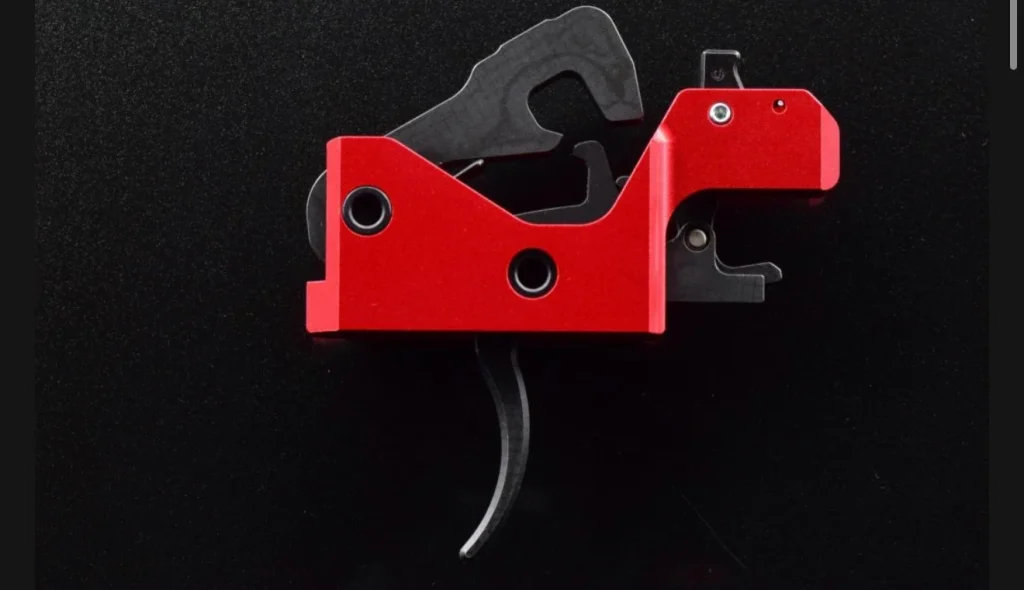
An FRT trigger, or Forced Reset Trigger, is a firearm trigger mechanism engineered to return the trigger toward its reset position through interaction with the firearm’s cycling mechanism.
That operating principle distinguishes an FRT from a conventional semi-automatic trigger. With a conventional trigger system, the shooter’s release of trigger pressure permits the trigger mechanism to reset. A forced-reset design instead uses the firearm’s operating cycle to mechanically force the trigger toward reset.
FRTs have attracted substantial legal attention because the distinction between trigger operation and the statutory definition of a machine gun can be technically significant. Federal litigation, agency enforcement positions, and state legislation have all contributed to a rapidly evolving legal landscape.
As a result, statements about FRT legality should always identify the specific device, jurisdiction, and relevant date.
Important: This article provides general educational information, not legal advice. Firearms laws vary by jurisdiction and can change through legislation, litigation, and regulatory action.
How Does a Forced Reset Trigger Work?
The defining characteristic of an FRT is its approach to trigger reset.
In a conventional trigger system, the trigger is actuated and the firearm cycles. The trigger mechanism then remains in a position that requires sufficient release of trigger pressure before the trigger can reset.
A forced-reset mechanism changes this sequence by mechanically driving the trigger toward its reset position as the firearm cycles.
At a conceptual level, the operating sequence is:
- The shooter actuates the trigger.
- The firearm fires and begins its normal cycling operation.
- Moving firearm components interact with the trigger mechanism.
- The trigger is mechanically driven toward its reset position.
- The trigger becomes capable of another firing cycle.
The precise geometry and operating method vary among designs. Those differences matter because the legal analysis may depend on the characteristics of the particular mechanism rather than simply its commercial name.
Why Trigger Reset Matters
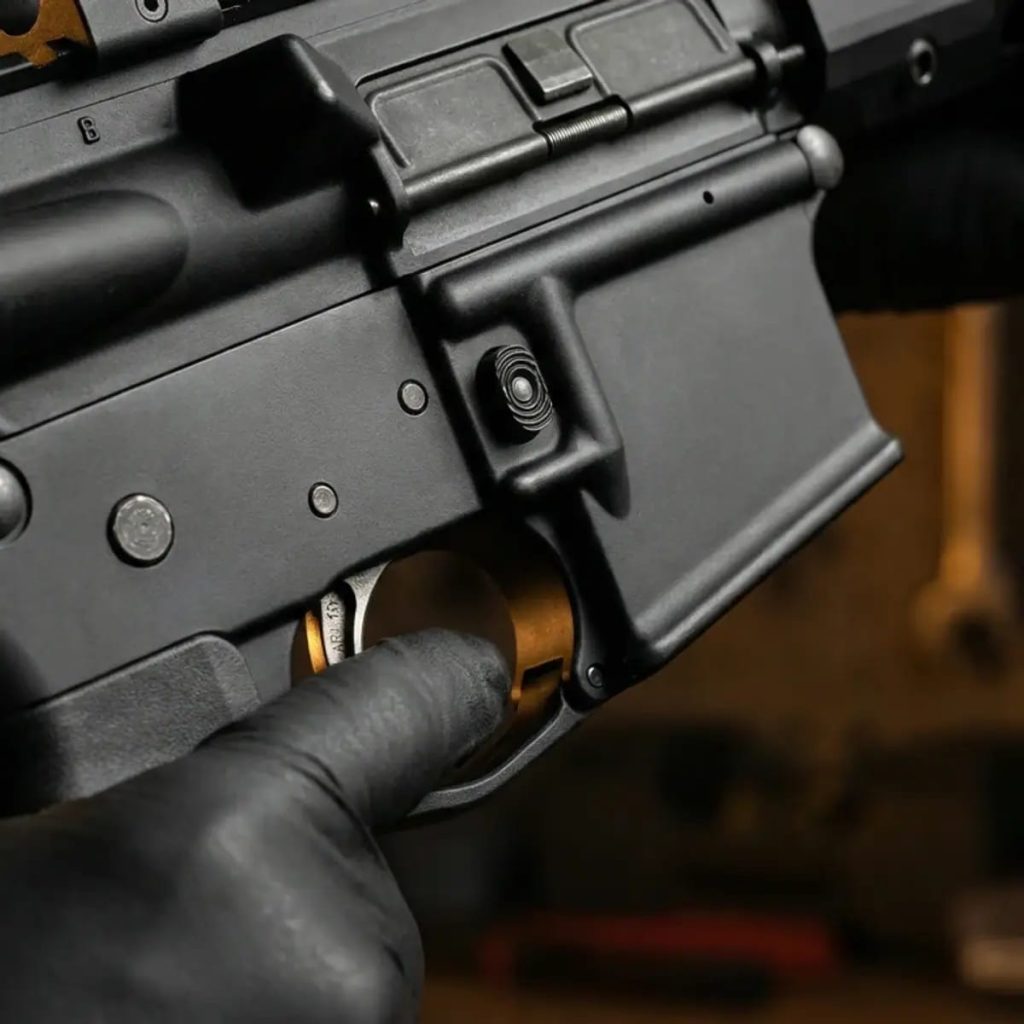
Trigger reset is a fundamental part of a semi-automatic firearm’s fire-control system. The distinction between trigger actuation, trigger reset, and subsequent trigger actuation is particularly important when analyzing federal definitions governing machine guns.
Accordingly, it is technically inaccurate to determine a device’s legal classification solely from its advertised firing characteristics. The underlying mechanism and applicable statutory language must be considered.
FRT Trigger vs. Conventional AR-15 Trigger
The fundamental mechanical distinction is how the trigger reaches its reset position.
| Characteristic | Conventional Trigger | Forced Reset Trigger |
|---|---|---|
| Reset mechanism | Conventional spring/disconnector system | Mechanically forced reset |
| Shooter’s trigger movement | Release generally permits reset | Firearm cycling mechanically assists reset |
| Intended operating platform | Varies by design | Specific compatible firearm platforms |
| Legal classification | Governed by applicable firearms law | Requires analysis of the specific mechanism and law |
| State restrictions | Jurisdiction dependent | Additional restrictions may apply in some jurisdictions |
This comparison describes mechanical characteristics and does not establish the legal status of any particular product.
Are FRT Triggers Legal?
There is no universally applicable answer.
The legal status of a forced-reset trigger can depend on federal law, judicial decisions, agency positions, state statutes, local regulations, and the specific characteristics of the device.
This distinction is particularly important because federal firearms law and state firearms law operate independently. A device’s treatment under federal law does not necessarily determine whether possession or transfer is lawful under state law.
Federal Law
Federal firearms law contains specific statutory definitions governing machine guns and other regulated firearms and components.
The federal machine-gun definition is therefore central to discussions concerning forced-reset trigger mechanisms. However, whether a particular FRT falls within that definition requires analysis of the applicable statute and the mechanism at issue.
Readers should also distinguish between:
- statutory language;
- judicial holdings;
- agency interpretations;
- enforcement policies; and
- litigation settlements.
These categories are legally different and should not be treated as interchangeable.
What Did Garland v. Cargill Decide?
The U.S. Supreme Court’s 2024 decision in Garland v. Cargill addressed whether the federal statutory definition of a machine gun encompasses bump stocks.
The decision is relevant to broader discussions of firearm trigger mechanisms because it examined the relationship between firearm mechanics and the statutory definition of a machine gun.
However, Cargill should not automatically be characterized as a blanket ruling concerning every forced-reset trigger.
A legal analysis of an FRT requires examination of the specific mechanism and the statutes, regulations, judicial decisions, and enforcement positions applicable to it.
Consequently, citing Cargill alone is insufficient to establish the current legal status of a particular FRT.
Federal Law Does Not Eliminate State Restrictions
One of the most common sources of confusion in discussions of FRT legality is the distinction between federal legality and state legality.
States may enact firearms laws that impose restrictions beyond federal requirements. Those laws can address possession, transfer, manufacture, transportation, or other conduct involving firearm components or devices.
State statutes may also use terminology that does not precisely match the manufacturer’s terminology. A search for the phrase “FRT trigger” therefore may not identify every potentially relevant restriction.
For anyone evaluating an FRT, the appropriate legal question is not simply:
“Are FRT triggers legal?”
Instead, the relevant questions include:
- What is the current federal legal position?
- What is the legal status of the specific device?
- What state law applies?
- Are there applicable local restrictions?
- Does the law distinguish between possession, transfer, manufacture, and transportation?
- Have recent court decisions or legislative amendments changed the applicable rule?
Why the Specific FRT Design Matters
“FRT” is a general product category rather than a complete legal description.
Different mechanisms can use different geometries, operating principles, materials, and fire-control configurations. Consequently, legal conclusions about one design should not automatically be extended to another.
This is particularly important when manufacturers make claims concerning compatibility, classification, or legality.
A technically responsible article should therefore avoid categorical statements such as “all FRTs are legal” or “all FRTs are machine guns.” Neither formulation adequately accounts for differences among devices or changes in applicable law.
Common Misconceptions About FRT Triggers
“An FRT is automatically a machine gun.”
That conclusion does not follow merely from the fact that a trigger resets automatically. Legal classification depends on the applicable statutory framework and the characteristics of the particular mechanism.
“One round per trigger pull automatically means a device is legal.”
That is also an incomplete analysis. Federal firearms law contains specific statutory definitions, and other provisions may apply. State law can independently impose restrictions.
“The Supreme Court ruled that all rapid-fire trigger devices are legal.”
The Supreme Court’s Cargill decision addressed bump stocks. It should not be treated as a universal ruling on every trigger mechanism.
“Federal law determines whether an FRT is legal everywhere.”
Federal law is only one component of the analysis. State and, in some circumstances, local laws may impose additional restrictions.
How to Research FRT Legality
Because the legal environment can change, research should prioritize current primary sources.
A practical research process is:
- Identify the exact device and manufacturer.
- Determine the current federal statutory framework.
- Review relevant federal court decisions.
- Check current federal agency positions or enforcement policies.
- Review the statutes and regulations in the applicable state.
- Check for recent amendments, injunctions, settlements, or other developments.
- Consult qualified legal counsel when the consequences of an incorrect interpretation are significant.
Readers should also distinguish information published on commercial websites from authoritative legal sources. Product descriptions are not substitutes for statutes, regulations, or court opinions.
Frequently Asked Questions About FRT Triggers
What does FRT stand for?
FRT generally stands for Forced Reset Trigger. The term describes a trigger mechanism designed to mechanically return the trigger toward its reset position as part of the firearm’s cycling operation.
How is an FRT different from a standard trigger?
The principal mechanical distinction is the method of reset. A conventional trigger relies on the shooter’s release of trigger pressure to permit normal reset, while a forced-reset mechanism uses the firearm’s cycling operation to mechanically drive the trigger toward reset.
Is an FRT legally considered a machine gun?
That question cannot be answered categorically for every FRT. The applicable federal statutory definitions, judicial decisions, agency positions, and characteristics of the specific mechanism must be considered.
Did Garland v. Cargill determine the legality of FRT triggers?
No blanket conclusion about every FRT follows from Cargill. The 2024 Supreme Court case concerned the federal machine-gun definition as applied to bump stocks.
Are FRT triggers legal in every state?
No. State firearms laws vary, and jurisdictions can impose restrictions that differ from federal law. Current state law should be reviewed before making assumptions about a particular device.
Can FRT laws change?
Yes. Statutes can be amended, courts can issue new decisions, agencies can change enforcement positions, and litigation can alter the practical legal landscape.
Is an FRT the same thing as a bump stock?
No. They are different firearm components that use different mechanisms. Their legal treatment should therefore be analyzed separately.
Conclusion
Forced-reset triggers occupy a technically and legally significant area of firearms regulation. Their defining mechanical feature is a reset mechanism that uses the firearm’s cycling operation to drive the trigger toward reset.
The legal analysis is more complicated than the product terminology alone suggests. Federal statutory definitions, judicial decisions, agency positions, the precise characteristics of a particular mechanism, and state-level restrictions can all be relevant.
For publishers, the most defensible approach is to separate mechanical description from legal classification, identify the relevant jurisdiction and date, cite primary authorities where possible, and avoid presenting changing legal questions as permanent conclusions.
Last reviewed: [Insert publication/review date]
Legal disclaimer: This article is provided for general informational purposes and is not legal advice. Firearms laws are jurisdiction-specific and subject to change. Readers should consult current primary legal sources and qualified counsel regarding their particular circumstances.
